

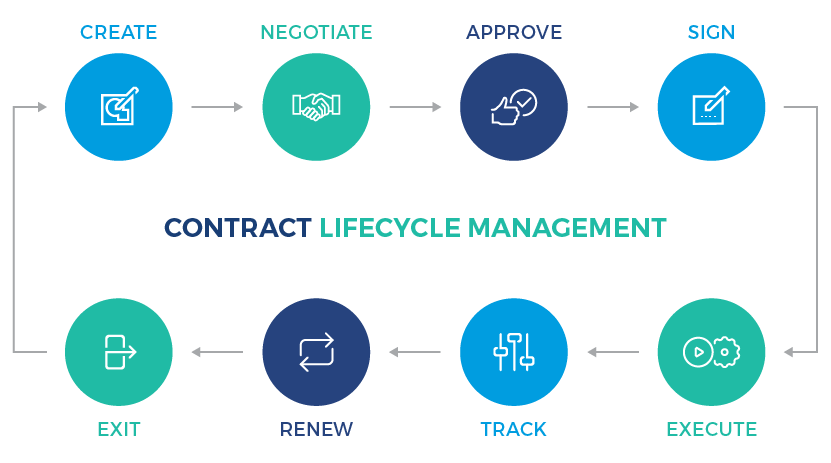
Do you know what is Contract management in a construction project and why is it so important? Let’s find out. You can define contract management by asking a few simple questions:
- Who will do what? (Scope of work, authority, liability)
- How does work progress? ( Timelines, the methodology of work)
- At what price?
- What if things don’t turn out as planned (Defining risk)
In short, contract management is about managing relationships between two parties with the help of a well-defined contract document.
Why Contract Management is Important?
In any construction project, there are a lot of players involved. The owner (who intend to build and ready to pay for it), Contractor (who take the responsibility of building), subcontractors (who actually work on the ground to execute the work in a sequential manner), Consultants (professional experts), suppliers (machinery and material providers). Managing all these stakeholders and ensuring that work happens smoothly is a challenging task for the Project manager. That’s where a Contract Management plays a key role. A good contract manager knows how to formulate, fine-tune, and interpret all the essential contracts for the different phases of the project. This results in minimizing the risk and maximizing the satisfaction of all the parties involved. What usually called a construction contract is the contract between owner/client and contractor.
Though Terms and conditions of contract largely depend on the nature, quantum, and complexity of the work, every contract document should at least include the following key elements :
- Price – At what price the work is to be executed and how the price is defined. Whether it is derived by item rate, Lump-sum price, Cost plus, percentage plus.
- Scope of work – “What to do and how to do?” is defined under the scope of work. A detailed scope of work involves –
- Defining work performed by contractors.
- Defining the order of performance.
- timelines for work completion.
- Authorities and liabilities of both the parties involved.
- Warranty and guarantee of the performance.
- Payment terms and conditions –
- Well-defined payment stages that define how interim payments will be requested
- Conditions to be satisfied to trigger the payment stage
- Defining timeline for the release of payment
- Defining retention or deduction to payments
- Monitoring a contract
- Schedule of definite timelines.
- If the timelines do not meet, what risk is involved in case of delay?
- Defining delay damages for late completion whether it is actual damages or liquidated damages.
- Dispute resolution
- Defining a procedure for how a change in scope of work, timelines, or contract price will be handled.
- How the project will proceed in the event of a serious dispute arising during the construction phase.
- How termination of the contract will happen and under what legal authorities this termination will be governed.
These are a major key elements that every contract document must include.
Conclusion
Let’s understand, any construction project unfolds in phases :
Conception, Design Development, Preconstruction, resource planning, and execution. Contracts management covers all of the above phases and contract document dictates the same.
I hope it clears the understanding and the importance of contract management in construction projects. Let me know your opinion about contract management and why it is important. Comment below and express yourself. Let’s be a proud Civil Engineer!